
Inflammation is not always the enemy — it’s the body’s natural defense mechanism.
But when it becomes chronic, silent, and systemic, it can contribute to fatigue, digestive issues, brain fog, joint pain, and even more serious health conditions.
Fortunately, the way we eat can either feed that fire — or gently soothe it.
Anti-inflammatory eating isn’t a strict diet. It’s not about cutting out entire food groups forever or following fads.
It’s a gentle, sustainable way of eating that respects your body’s rhythms and uses food as daily support for healing.
Let’s explore how this approach brings balance, not restriction — and long-term well-being, not quick fixes.
1. What Is Inflammation, Really?
Inflammation is the immune system’s response to injury, infection, or irritation.
Short-term inflammation is essential for healing. But when it becomes chronic, it can quietly affect:
- Gut health
- Hormones
- Skin
- Mental clarity
- Energy and mood
It often stems from:
- Processed foods
- Refined sugar
- Poor sleep
- Chronic stress
- Environmental toxins
Anti-inflammatory eating helps the body calm this constant response, gently.
2. The Foundation: Whole, Natural Foods
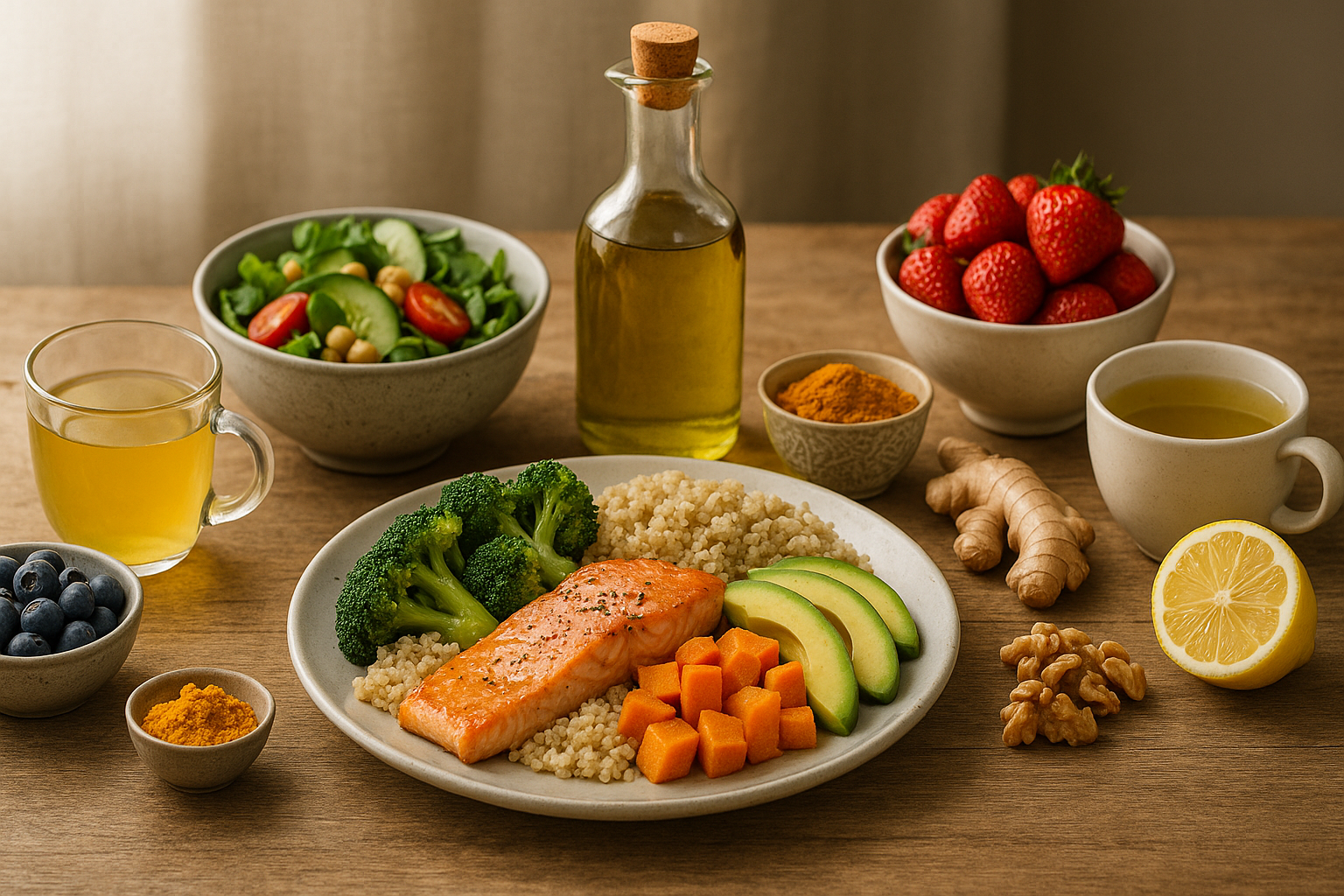
At the heart of this lifestyle is real food:
- Fresh vegetables (especially leafy greens)
- Fruits (especially berries, citrus, papaya)
- Whole grains (quinoa, oats, brown rice)
- Nuts and seeds (chia, flax, almonds)
- Healthy fats (olive oil, avocado, fatty fish)
- Legumes (lentils, black beans)
- Herbs and spices (turmeric, ginger, cinnamon)
The less processed, the better. Nature has already done the work — we just need to return to it.
3. Foods That Calm Inflammation
Here are key anti-inflammatory allies:
✅ Berries — full of antioxidants and polyphenols
✅ Leafy greens (spinach, kale) — rich in magnesium and chlorophyll
✅ Fatty fish (like wild salmon or sardines) — packed with omega-3s
✅ Extra virgin olive oil — one of the most studied anti-inflammatory fats
✅ Turmeric + black pepper — powerful duo to reduce joint pain and swelling
✅ Ginger — great for digestion and immune support
✅ Avocados — healthy fats + fiber
✅ Green tea — contains catechins for brain and heart health
Tip: Incorporate at least 3 of these daily for consistent support.
4. Foods to Reduce or Avoid Gently
Instead of strict elimination, think of it as crowding out — adding more good, reducing the rest.
⚠️ Limit:
- Ultra-processed packaged foods
- Refined vegetable oils (soybean, corn, canola)
- Excess sugar and sugary drinks
- White bread, pastries, and refined carbs
- Alcohol (especially when frequent or excessive)
- Processed meats (bacon, sausage, deli meats)
You don’t have to cut everything overnight. Start small. Choose consciously.
5. Listen to How Food Makes You Feel
Your body is always giving feedback — we just have to notice it.
After eating, ask:
- Do I feel light or bloated?
- Energized or foggy?
- Calm or irritated?
- Satisfied or still craving?
Healing through food is less about what’s “allowed” and more about what feels healing for you personally.
6. Create Soothing Food Rituals
Calm food calms the body — but so does how we prepare and eat it.
Gentle practices:
- Herbal teas in the morning and evening
- Cooking at home with quiet music or silence
- Sitting down to eat (not on the go)
- Chewing slowly and mindfully
- Saying a quiet “thank you” to your meal
These rituals signal safety to the nervous system — reducing cortisol and improving digestion.
7. Balance Is Key: Anti-Inflammatory ≠ Restrictive
This approach doesn’t require you to:
- Give up everything you love
- Follow trends
- Count calories
- Live in fear of food
It simply asks:
- “How can I bring more color, nature, and nourishment to this meal?”
- “What does my body truly need today?”
There’s room for flexibility, joy, and even comfort foods — when they’re made with love and care.
8. A Sample Day of Anti-Inflammatory Eating
🌞 Morning
- Warm water with lemon
- Oats with cinnamon, blueberries, flaxseed
- Green tea or herbal infusion
🌤️ Midday
- Quinoa salad with greens, roasted veggies, chickpeas, olive oil
- Avocado slices with lemon and sea salt
☕ Afternoon
- Ginger tea
- A few walnuts and a square of 70% dark chocolate
🌙 Dinner
- Grilled salmon or tofu
- Steamed broccoli with turmeric and black pepper
- Brown rice or roasted sweet potato
✨ Evening
- Chamomile or turmeric golden milk
- Journaling, silence, sleep
Final Thought: Let Food Soothe, Not Stress
Anti-inflammatory eating isn’t a strict set of rules.
It’s an invitation to:
- Slow down
- Come back to whole foods
- Eat with attention
- Support your body with nature
- Use meals as quiet moments of healing
You don’t need perfection — you need consistency, compassion, and care.
Let food be a language of love — one plate at a time.