
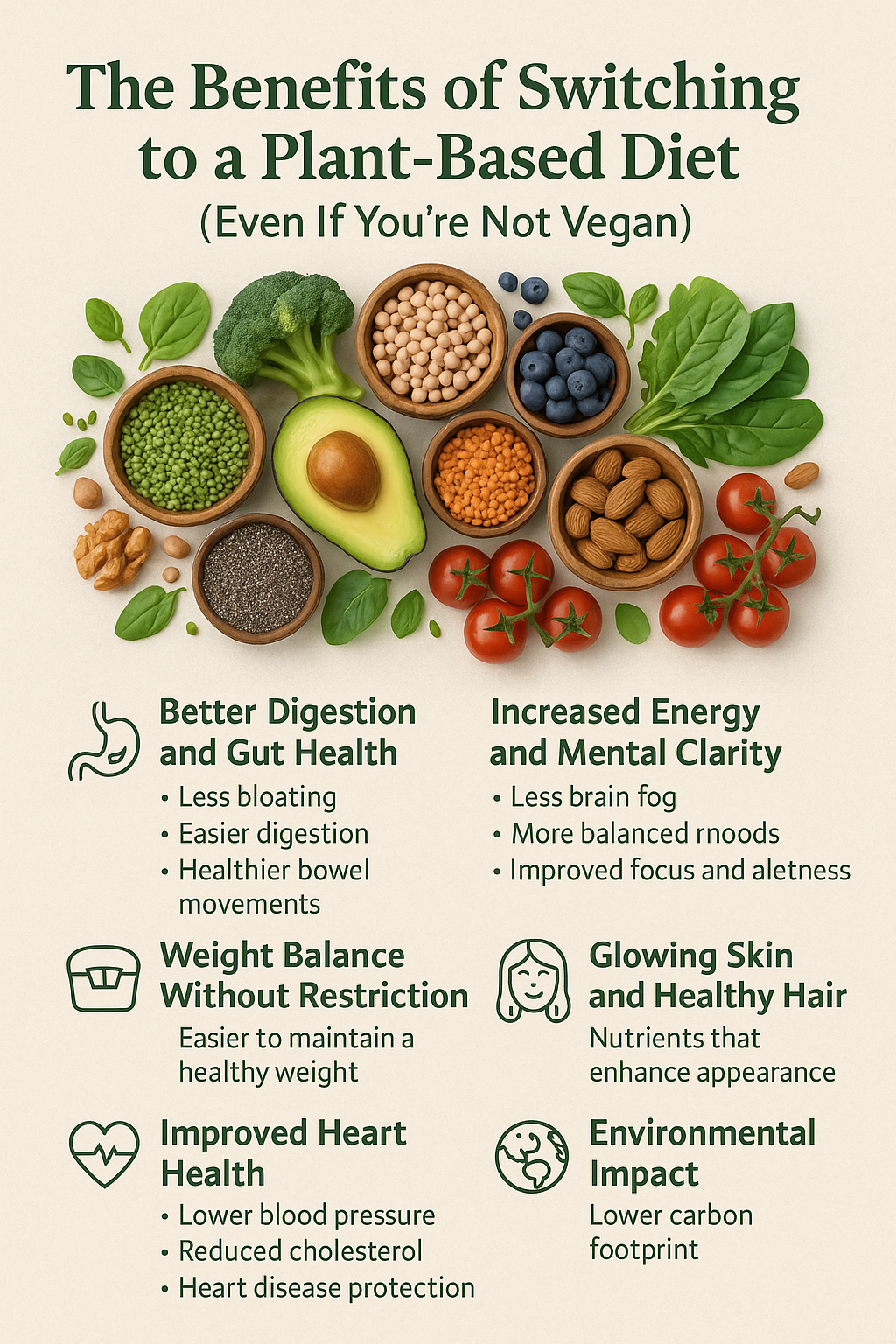
You don’t need to go fully vegan to reap the benefits of eating more plants. Whether you’re curious, flexitarian, or simply want to make healthier choices, shifting toward a plant-based diet can transform your energy, mood, and overall well-being — naturally.
This article will walk you through the real, evidence-backed benefits of eating more whole, plant-based foods, plus practical tips on how to start without feeling restricted or overwhelmed.
What Does “Plant-Based” Really Mean?
A plant-based diet emphasizes whole foods that come from plants, including:
- Fruits and vegetables
- Whole grains
- Legumes (beans, lentils, peas)
- Nuts and seeds
- Herbs and spices
It doesn’t mean you must give up all animal products — many people eat mostly plant-based, with occasional animal products in moderation.
Key Benefits of a Plant-Based Diet
1. Better Digestion and Gut Health
Plant-based diets are naturally high in fiber, which feeds your good gut bacteria, promotes regularity, and supports immune function.
You’ll likely notice:
- Less bloating
- Easier digestion
- Healthier bowel movements
2. Increased Energy and Mental Clarity
Whole, nutrient-dense foods provide steady energy, compared to the spikes and crashes from processed and refined products.
People often report:
- Less brain fog
- More balanced moods
- Improved focus and alertness
3. Weight Balance Without Restriction
Fruits, vegetables, and legumes are low in calories but high in volume and nutrients — which means you can feel full and satisfied without counting calories.
Bonus: It’s easier to maintain a healthy weight over time.
4. Improved Heart Health
A plant-based diet helps reduce blood pressure, lower cholesterol, and protect against heart disease. Leafy greens, beans, and berries are especially heart-friendly.
The science is clear: eating more plants supports long-term cardiovascular wellness.
5. Reduced Inflammation
Many chronic health issues are linked to inflammation. A plant-rich diet provides antioxidants and phytonutrients that fight inflammation naturally.
Examples:
- Turmeric
- Berries
- Leafy greens
- Olive oil
- Green tea
6. Glowing Skin and Healthy Hair
Nutrients like vitamin C, zinc, biotin, and antioxidants in fruits and vegetables help improve skin texture, reduce acne, and strengthen hair.
Good nutrition shines through your skin.
7. Environmental Impact
Eating more plants and fewer animal products can drastically reduce your carbon footprint and water use. It’s one of the most effective ways to live more sustainably.
Your plate becomes a powerful environmental action.
What About Protein?
You can get plenty of protein from plants:
- Lentils
- Chickpeas
- Quinoa
- Hemp seeds
- Tofu
- Tempeh
- Chia seeds
- Nuts and nut butters
Tip: Combine different plant sources throughout the day to ensure all essential amino acids.
Easy Ways to Start Eating More Plant-Based
- Try Meatless Mondays
- Swap cow’s milk for oat, almond, or soy milk
- Add beans to your salads or soups
- Make smoothies with greens and fruits
- Try veggie stir-fries, Buddha bowls, or hearty lentil stews
- Replace processed snacks with fruit, nuts, or hummus with veggies
It’s Not All or Nothing
This isn’t about labels — it’s about listening to your body and making choices that align with your values and health goals.
Even one plant-based meal a day can have a big impact over time.
Final Thoughts: More Plants, More Life
Eating a plant-based diet isn’t about deprivation. It’s about abundance — of colors, flavors, nutrients, and vitality.
When you fuel your body with what nature offers, you support not just your physical health but your energy, clarity, and connection to the world around you.
Start with one plate. One swap. One meal. And enjoy the benefits naturally.