
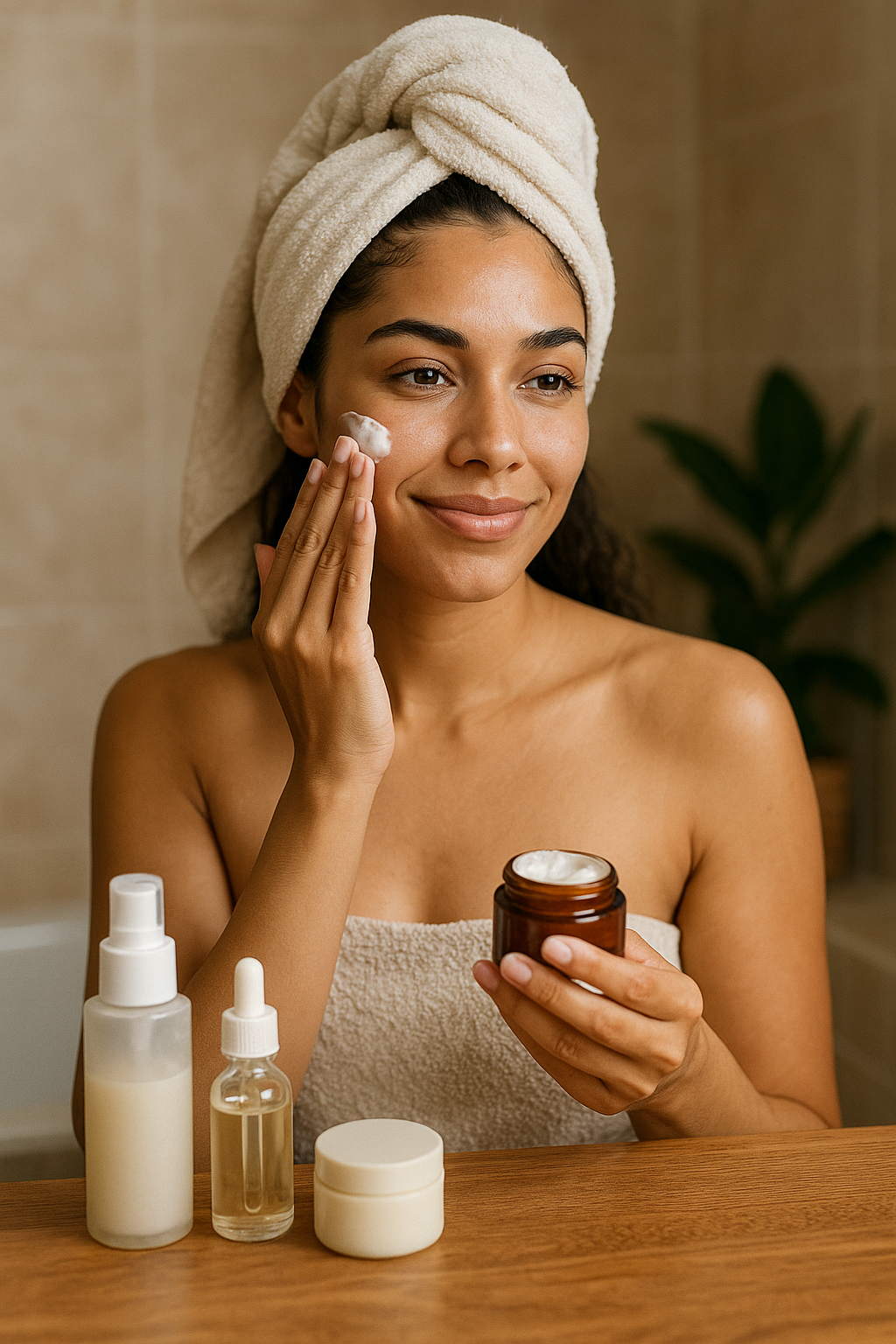
Your skin is your largest organ — and what you put on it matters. Every day, we’re exposed to ingredients that can clog pores, disrupt hormones, and accelerate aging. But you don’t need a cabinet full of expensive products to take care of your skin.
In this article, you’ll learn how to build a simple, effective natural skincare routine that leaves your skin healthy, balanced, and naturally glowing.
Why Choose Natural Skincare?
Conventional skincare products often contain:
- Synthetic fragrances
- Parabens and phthalates
- Harsh preservatives
- Sulfates and silicones
- Alcohols that dry and irritate
Natural skincare focuses on plant-based, non-toxic ingredients that support your skin’s natural functions — rather than overpowering them.
Step 1: Know Your Skin Type
Before starting any routine, you need to understand your skin’s needs.
- Dry skin: Feels tight, flaky, or rough
- Oily skin: Shiny, larger pores, prone to breakouts
- Combination: Oily T-zone, dry cheeks
- Sensitive: Reacts to fragrances, products, or temperature
- Normal: Balanced, few issues
Once you know your type, you can select the right natural ingredients for your skin.
Step 2: Cleanse Gently
Cleansing removes dirt, oil, and environmental buildup. But harsh cleansers strip your skin’s protective barrier.
Natural cleansers:
- Oil cleansing (for all types): jojoba, sweet almond, or argan oil
- Honey cleansing (for sensitive/dry): raw honey is antibacterial and hydrating
- Aloe vera gel (for oily/sensitive): calming and soothing
Cleanse once a day (usually at night) to avoid over-stripping.
Step 3: Tone With Purpose
Toning balances pH and preps skin to absorb moisture. Skip alcohol-based toners — they cause dryness and irritation.
Natural toners:
- Rose water (hydrating and gentle)
- Witch hazel (great for oily or acne-prone skin)
- Green tea mist (antioxidant and anti-inflammatory)
Apply with a reusable cotton round or gently pat onto skin with clean hands.
Step 4: Hydrate and Moisturize
Your skin needs moisture — even if it’s oily.
For dry skin:
- Shea butter, rosehip oil, or avocado oil
For oily/combo skin:
- Jojoba oil (mimics natural sebum)
- Aloe vera gel + a few drops of facial oil
Apply while skin is slightly damp to lock in hydration.
Step 5: Exfoliate (But Not Too Often)
Exfoliation removes dead skin cells and boosts glow — but overdoing it damages your barrier.
Natural exfoliants:
- Oatmeal + honey mask (gentle and soothing)
- Ground almonds + yogurt (nourishing and polishing)
- Papaya or pineapple enzymes (for sensitive skin — use cautiously)
Limit to 1–2 times per week depending on your skin’s tolerance.
Step 6: Use Targeted Treatments as Needed
Natural treatments can help with specific skin issues like acne, hyperpigmentation, or dullness.
Options:
- Tea tree oil (diluted): Spot treatment for pimples
- Turmeric mask: Brightens and reduces dark spots
- Clay masks: Draw out impurities (great for oily skin)
- Calendula: Soothes redness and irritation
Apply sparingly and test for sensitivity first.
Step 7: Protect Your Skin (Yes, Even Naturally)
Sun protection is essential — even with a natural routine.
Safer options:
- Zinc oxide-based mineral sunscreens
- Hats and shade during peak UV hours
- Carrot seed oil or raspberry seed oil (mild SPF, not a full substitute)
Avoid chemical SPF ingredients like oxybenzone and octinoxate.
Bonus Tips for Glowing Skin
- Stay hydrated — inside and out
- Eat a whole-food diet rich in antioxidants (greens, berries, seeds)
- Get quality sleep and reduce stress
- Use a silk pillowcase and change it regularly
- Don’t over-cleanse or pick at your skin
Remember: glowing skin is a result of balance, not perfection.
Final Thought: Simple Is Powerful
You don’t need a 12-step routine or expensive serums to care for your skin. With natural ingredients, a few intentional habits, and some consistency, you can let your skin do what it’s built to do: thrive and glow.
Trust nature. Trust your body. And let your beauty come through — naturally.