
You might not realize it, but many everyday items inside your home — from cleaning sprays to candles to plastic containers — may contain hidden toxins that affect your health over time.
But don’t worry. Detoxing your home doesn’t have to be overwhelming or expensive. In this article, you’ll learn simple, natural ways to reduce toxins in your living space and create a cleaner, safer environment for you and your family.
Why Reduce Household Toxins?
Toxins in the home can come from:
- Synthetic cleaning products
- Artificial air fresheners and candles
- Plastic containers and packaging
- Pesticides and herbicides
- Non-stick cookware
- Paints, furniture, and building materials
Long-term exposure may contribute to:
- Allergies and asthma
- Hormonal imbalances
- Headaches or fatigue
- Skin irritation
- Poor indoor air quality
1. Switch to Natural Cleaning Products
Most conventional cleaning products contain harsh chemicals that irritate the skin, lungs, and eyes.
Natural alternatives:
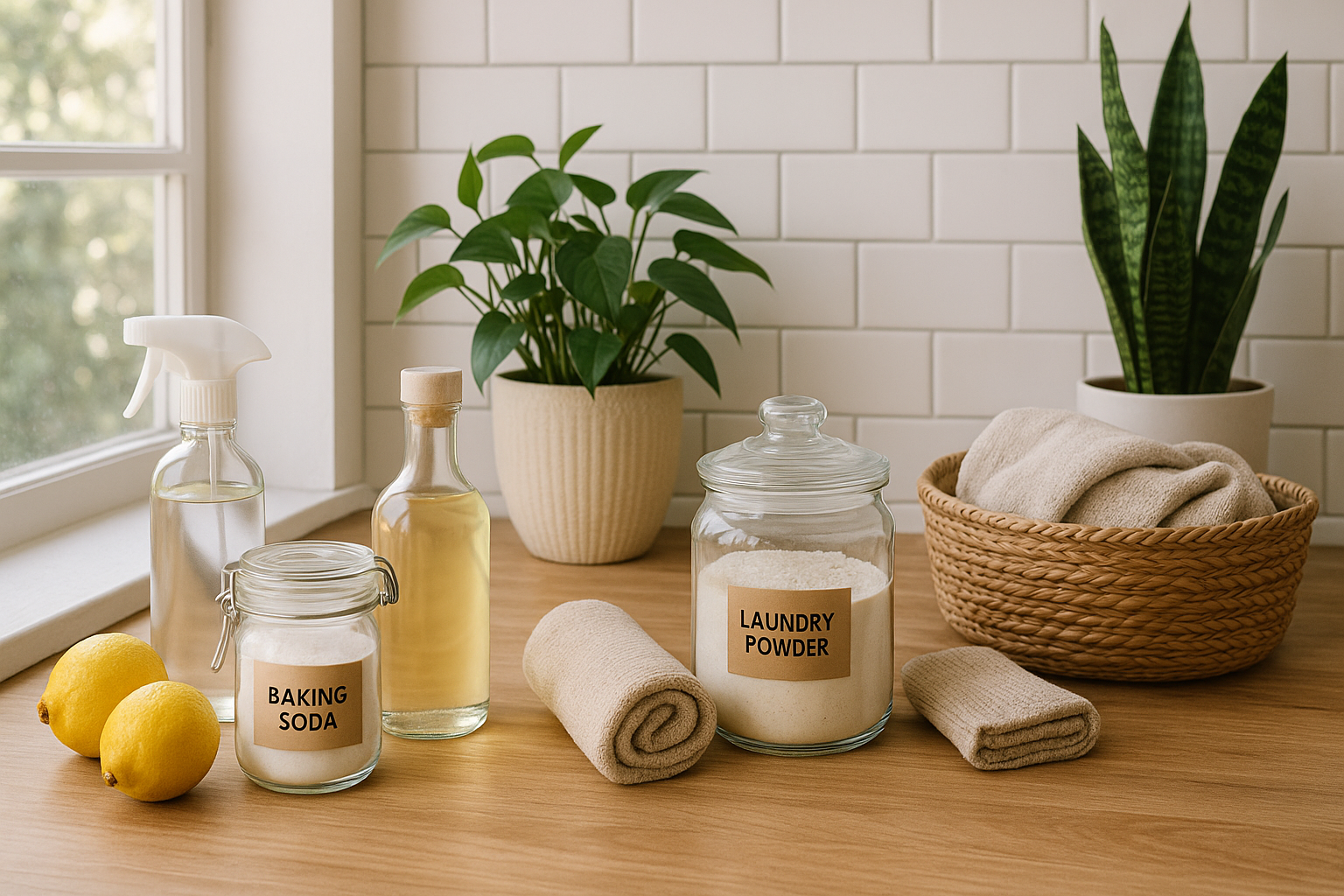
- White vinegar + water + lemon essential oil for surface cleaning
- Baking soda for scrubbing sinks and tubs
- Castile soap for general cleaning
Tip: You can DIY most cleaners for pennies.
2. Open Your Windows Often
Indoor air can be up to 5 times more polluted than outdoor air, especially if ventilation is poor.
Simple solution:
- Open windows for at least 15–30 minutes a day to refresh the air
- Use fans to circulate fresh air throughout your space
- Add indoor plants that purify air (like peace lily, spider plant, or snake plant)
3. Choose Fragrance-Free or Naturally Scented Products
Artificial fragrances in candles, sprays, laundry detergent, and personal care items often contain phthalates and VOCs, which disrupt hormones.
What to do:
- Use essential oil diffusers instead of synthetic air fresheners
- Buy fragrance-free or naturally scented options
- Check labels for “no synthetic fragrance”
4. Switch to Glass or Stainless Steel Containers
Plastic containers can leach BPA and other endocrine-disrupting chemicals, especially when heated.
Healthier options:
- Store food in glass jars or stainless steel
- Use beeswax wraps instead of plastic wrap
- Avoid microwaving anything in plastic
5. Use Natural Laundry Products
Laundry products are full of synthetic fragrances and softeners that cling to your clothes and skin.
Natural options:
- Unscented or plant-based laundry detergent
- Replace dryer sheets with wool dryer balls + essential oil drops
- Add vinegar to the rinse cycle for natural softening
6. Filter Your Water
Tap water may contain chlorine, heavy metals, and pharmaceutical residues.
Tips:
- Use a water filter pitcher or install a countertop filtration system
- Choose filters certified to remove lead, chlorine, and microplastics
- Clean your filter regularly to avoid bacteria buildup
7. Replace Non-Stick Cookware
Many non-stick pans are made with PFOA, Teflon, and other harmful coatings that release toxins when heated.
Better choices:
- Cast iron
- Stainless steel
- Ceramic-coated pans
They last longer and cook cleaner.
8. Remove Shoes at the Door
Shoes bring in pesticides, heavy metals, and dirt from outside.
Simple habit: Leave a small rack by the door and wear house-only slippers indoors.
9. Dust and Vacuum Regularly
Dust can carry toxins from furniture, paint, and electronics. If you don’t remove it, it just circulates back into the air.
Tips:
- Use a HEPA vacuum filter
- Dust with a damp cloth to trap particles
- Wash pillowcases and curtains regularly
Final Thoughts: A Toxin-Free Home Is a Healthier Home
You don’t need to aim for perfection — just progress. Start with one small change each week. Over time, your home becomes a peaceful, clean space that nourishes your body, your mind, and your family.
Nature has all the tools we need. The more we bring natural choices indoors, the more aligned our lives become with balance, wellness, and simplicity.